Persia and the Caucasus · Volume 10, Rice, Reduction and the Country Beyond the Kebab House
Kuku Sabzi
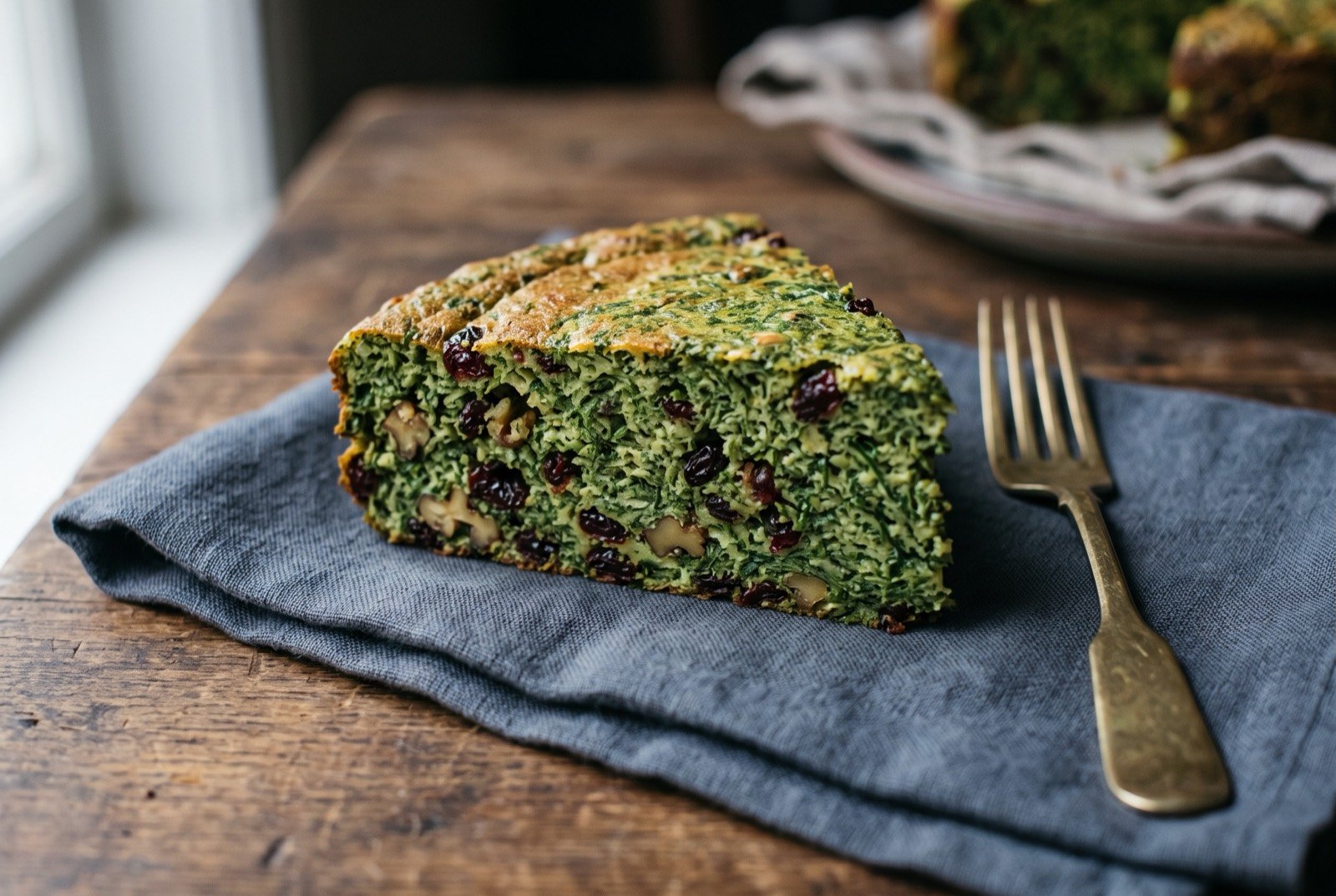
Illustration
- Time
- 15 minutes
As tradition built it
Serves 4. About 30 minutes, including a covered stovetop cook of 10 to 15 minutes.
Ingredients
- 200g each parsley, coriander and dill, roughly equal volumes
- small handful a smaller handful of spinach
- pinch a pinch of dried fenugreek leaf
- for sautéing oil, for sautéing the herbs
- 6 eggs
- 1 tsp turmeric
- to taste salt and pepper
- scatter barberries, a scatter
- scatter walnuts, chopped, a scatter
Method
- Wash and dry, thoroughly, the parsley, coriander, dill, spinach and fenugreek leaf, then chop very fine (a food processor is acceptable here since the herbs are cooked, not eaten raw).
- Sauté the chopped herbs briefly in oil, just long enough to drive off any remaining moisture and concentrate their aroma, since even a small amount of residual water will make the finished kuku loose rather than set.
- Cool, then whisk with the eggs, turmeric, salt, pepper and a scatter of barberries and chopped walnuts.
- Pour into a well-oiled pan and cook slowly, covered, over low heat until almost set through, then finish briefly under a hot grill or flip to colour the second side.
- Serve at room temperature, cut into wedges.
What a modern chef changes
Method
- Dry the washed herbs properly in a salad spinner and then briefly in a low dehydrator, rather than only patting them with a cloth, since the traditional failure mode of this dish, a loose, wet kuku, is a moisture problem that reliably solves.
- Cook the egg mixture gently in a water bath rather than directly over a flame, for an evenly set, custard-like texture edge to edge rather than the slightly overcooked rim a stovetop pan tends to produce.
- Finish with walnuts toasted and roughly crushed rather than raw, for a genuine textural contrast against the set egg that the traditional recipe, made quickly on a weekday morning, rarely bothers with.