The Caribbean · Volume 15, Salt, Spice and the Limestone Coast
Farine and Cassava Bread
Dominica
Illustration
As tradition built it
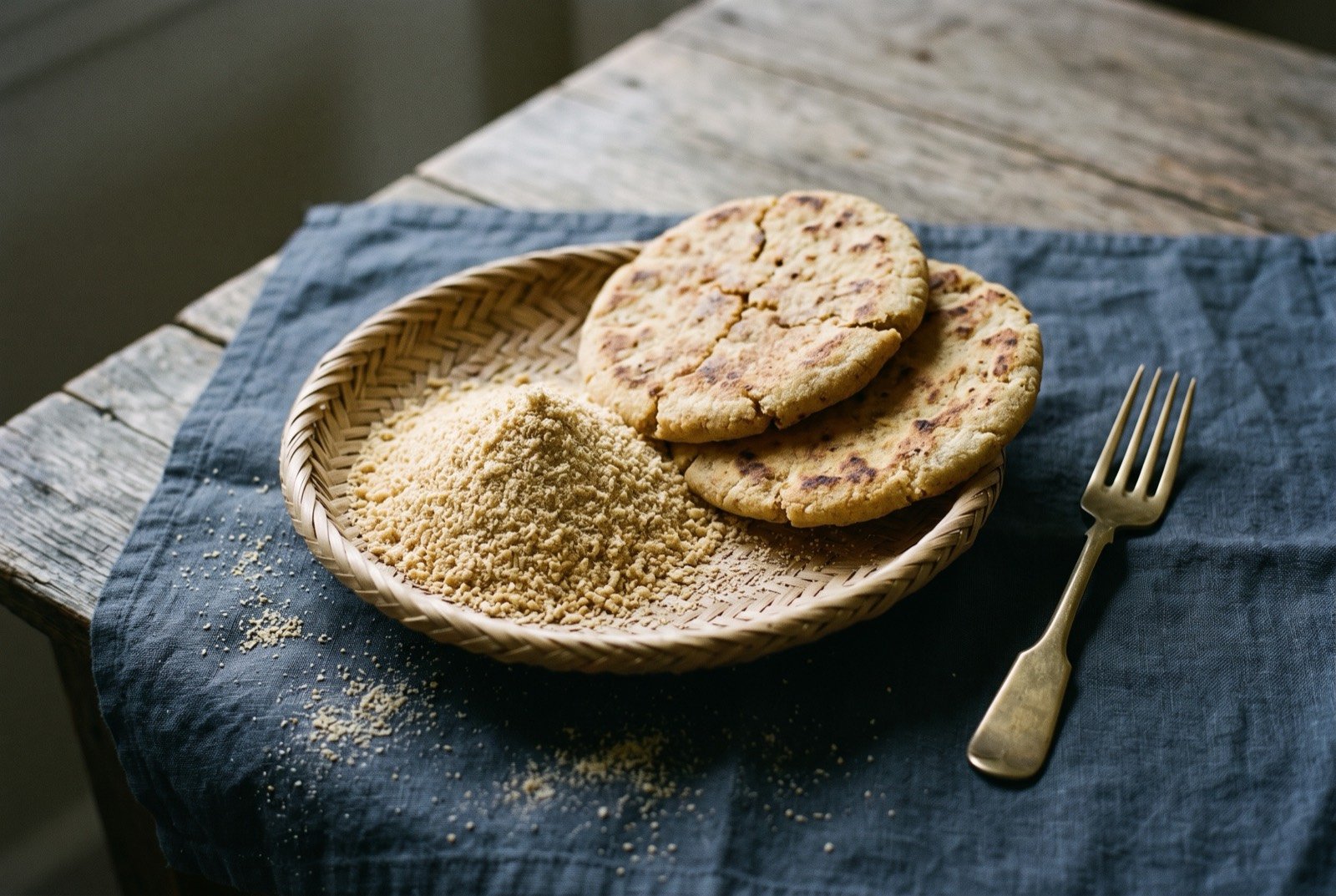
Farine and Cassava Bread
Dominica's Kalinago staple
Ingredients
- as available bitter cassava, for the farine
- 3 cups farine
- 3 cups water
- 1 cup cassava flour
Method
- Peel the bitter cassava and grate it on a stone or metal sheet grater.
- Press the grated cassava in a matapie, a long woven sack twisted to squeeze out the liquid carrying the root's toxic prussic acid.
- Toast the pressed pulp over a coal fire, hand-stirred continuously, into farine, sieved fine or coarse depending on its use.
- For cassava bread, by a simplified modern method from a Dominica-based food writer: mix three cups farine, three cups water and one cup cassava flour to a dough.
- Shape into flattened discs and roast on a hot griddle for around fifteen minutes total.
Notes
The source for the cassava bread method notes that the fully traditional method, grating fresh root rather than starting from processed farine, is exceptionally complicated and learned only by years of childhood observation.
What a modern chef changes
Even Toasting, Two Grinds
Rung 05
Method
- Run a dehydrator at a low, controlled temperature to replicate the slow moisture loss of traditional sun and coal-fire toasting far more evenly than a domestic oven, giving a farine with a more consistent grain size for grinding.
- Toast the finished farine briefly and hard on a Big Green Egg's cast-iron surface rather than a domestic griddle, closer to the traditional open coal fire's direct, high heat.
- Grind a portion of toasted farine finer still in a dedicated spice grinder, folding it into a modern flatbread dough alongside the coarser traditional grade, for two textures side by side rather than choosing one.