North America · Volume 32, The Prairie and the Port
Crawfish Étouffée
Breaux Bridge and Henderson, Louisiana
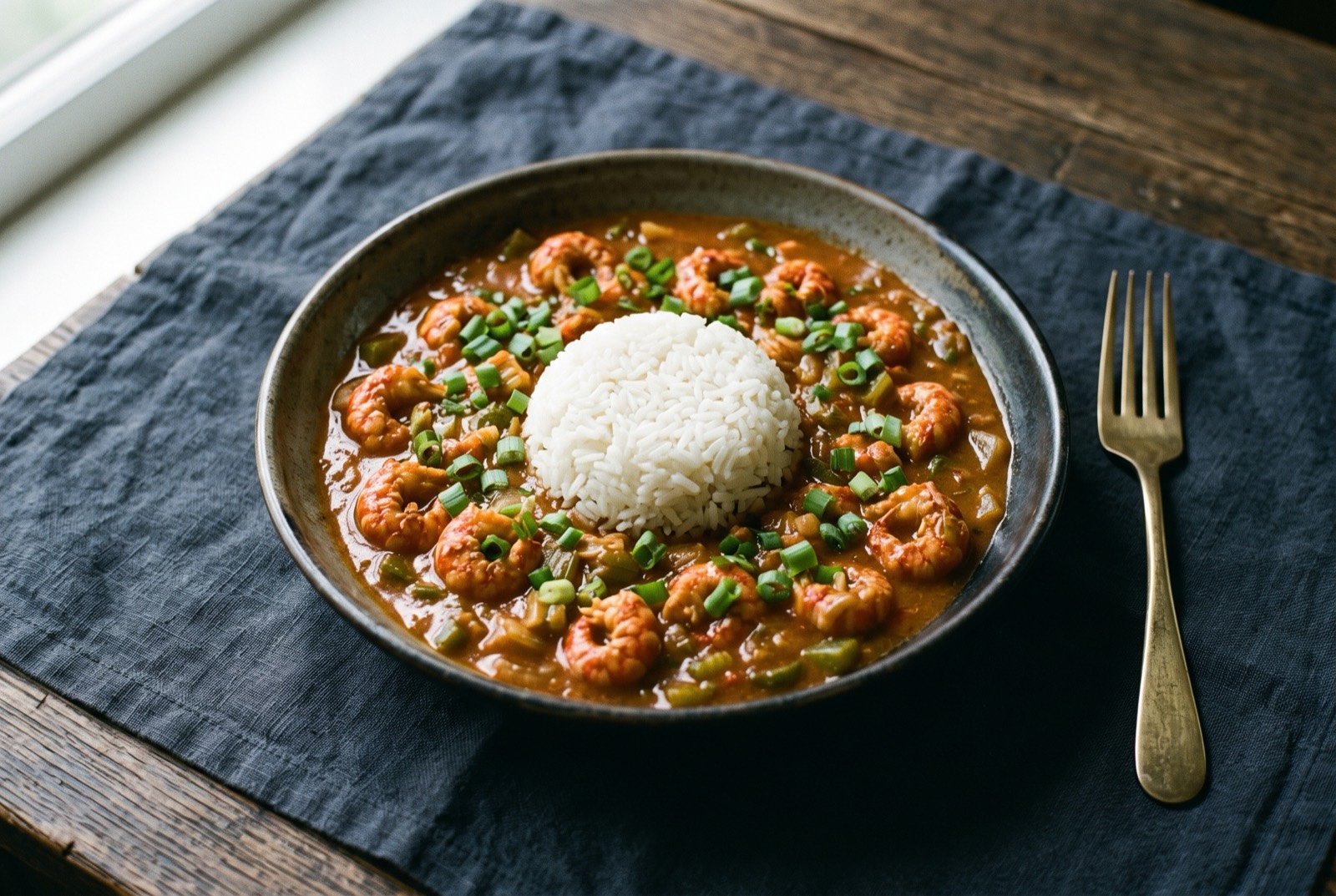
Illustration
As tradition built it
Crawfish Étouffée
Per 64 Parishes
Ingredients
The method as the tradition gives it, with the ingredients named. Quantities follow as we verify them, lead dishes first.
Cajun version
- 1 lb (4 sticks) butter, margarine or lard
- 2 cups onion, 1 cup celery, 1 cup bell pepper onion, celery and bell pepper (the holy trinity)
- crawfish fat (hepatopancreas)
- 1 1/2 cups, if using crawfish shell stock, sometimes
- 2 lb crawfish tails
Creole version
- 1/4 lb butter with 1 cup flour, cooked to a blonde stage butter-based roux
- 1/2 cup diced tomatoes plus 1/2 cup tomato sauce tomatoes
- 1 cup onion, 1/2 cup celery, 1/2 cup bell pepper onion, celery and bell pepper (the holy trinity)
- 2 lb crawfish tails
Method
- First served as a tomato based "crawfish courtbouillon" by Yolie and Marie Hébert at the Hébert Hotel in Breaux Bridge in the 1920s, then reworked without tomato, garlic or celery by Aline Guidry Champagne at Guidry's Place in Henderson in the late 1940s, and formally named on the menu, by then the Rendezvous Club, in 1950.
- The Cajun version is built on butter, margarine or lard with the trinity, its essential ingredient the crawfish's own fat, properly its hepatopancreas, sometimes supplemented with a stock made from the shells, and it is traditionally made without a classic flour roux at all, relying instead on that fat and a hard reduction for body.
- The Creole version instead starts from a butter based roux and folds tomatoes in alongside the trinity.
Notes
This chapter states this distinction as 64 Parishes's own characterisation rather than an absolute rule, since it was not independently corroborated elsewhere and some modern Cajun étouffée recipes do use a light roux.
What a modern chef changes
A reduction in place of a roux, and crawfish finished sous vide
Method
- Render the crawfish fat and shells separately into a concentrated stock, reduced hard in a high power blender and passed through a chinois, then use that reduction, rather than a roux, to carry the traditional Cajun version's body, taking the dish's own stated no-roux logic and pushing it further with equipment the original cooks did not have.
- Cook the crawfish tails themselves sous vide, briefly and at a precise low temperature, so they finish in the sauce only at the last moment rather than simmering through the whole pot and turning rubbery, a genuine risk with a delicate shellfish in a long-cooked stew.
- For the Creole version specifically, dehydrate a portion of tomato ahead of time for the same concentrated-sweetness reason given above for jambalaya.