North America · Volume 32, The Prairie and the Port
Po'boy
New Orleans, Louisiana
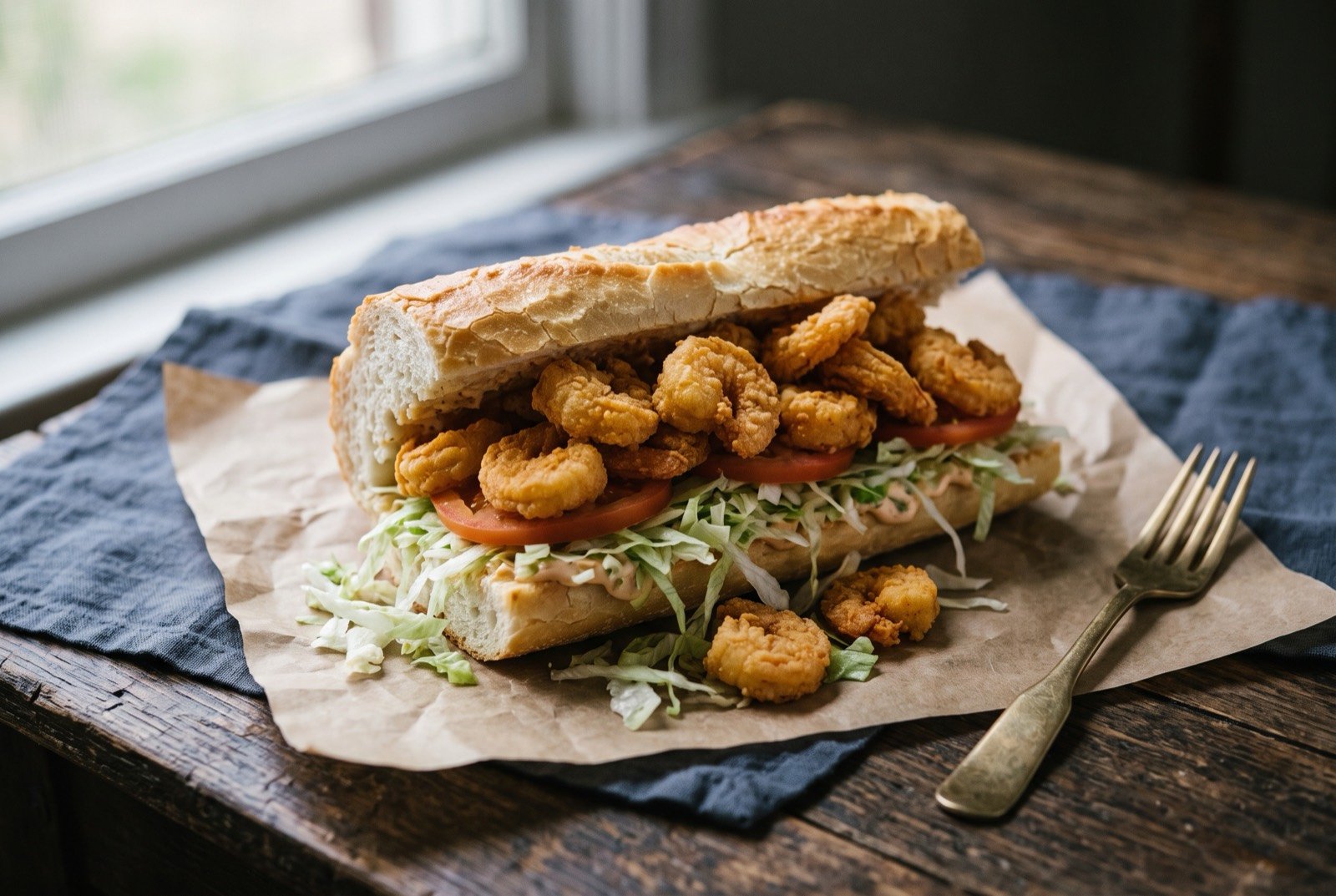
An illustration of the dish, not a photograph of it cooked.
- Time
- Not statedNo source states a time and the atlas has too few comparable dishes to estimate one.
- Researched
- No outside sources linked
- Reviewed
- Not yet reviewed from inside the tradition
- Cooked
- Not yet cooked and reported
As tradition built it
Po'boy
The Martin brothers' own account, alongside the popular strike origin story
Ingredients
- for frying shrimp or oysters, for frying
- as available shredded lettuce, for dressing
- 40 inch loaf bread, to Gendusa's specification
Method
- Clovis and Bennie Martin, former streetcar conductors turned restaurateurs, ran the Martin Brothers' Coffee Stand and Restaurant in the French Market from 1922.
- During the New Orleans streetcar strike that began on 1 July 1929, a dispute over workplace control rather than wages, the Martins offered free sandwiches to any striking member of Division 194, working with the baker John Gendusa to develop a uniform forty inch loaf specifically to make cheap, mass sandwich production possible.
- Fill the loaf with fried shrimp or oysters and dress with lettuce.
Notes
The popular origin story, that staff greeted an approaching striker with "here comes another poor boy," was not reported in the local press until roughly forty years after the strike, and the Martin brothers' own earlier account credits the sandwich to poor boys generally, farmers and dock workers among them, at their original French Market stand, not specifically to the strikers. This chapter gives both accounts rather than the tidier, later one alone.
A competing folk story tying the name to French pour bourre, for tips, and to Ursuline nuns distributing bread to beggars, has no documentary evidence in period newspapers or menus and does not belong in the settled record either.
What a modern chef changes
A held fry temperature and a proper long loaf
Method
- Fry the po'boy's traditional shrimp or oyster filling at a precisely held temperature rather than by eye, in small batches, for a more even crust than a home fryer managed by feel typically gives.
- Dehydrate a portion of the traditional dressing's shredded lettuce briefly and grind it into a fine seasoning dust folded through the remaining fresh lettuce, a concentrated green note against the crisp fry.
- Bake the loaf itself, matching Gendusa's original forty inch specification as closely as a domestic oven allows, since the bread, thin and crackling on the outside, genuinely soft within, is as much the dish's real technical achievement as anything inside it.