North America · Volume 32, The Prairie and the Port
Jambalaya, Cajun Brown and Creole Red
Acadiana and New Orleans, Louisiana
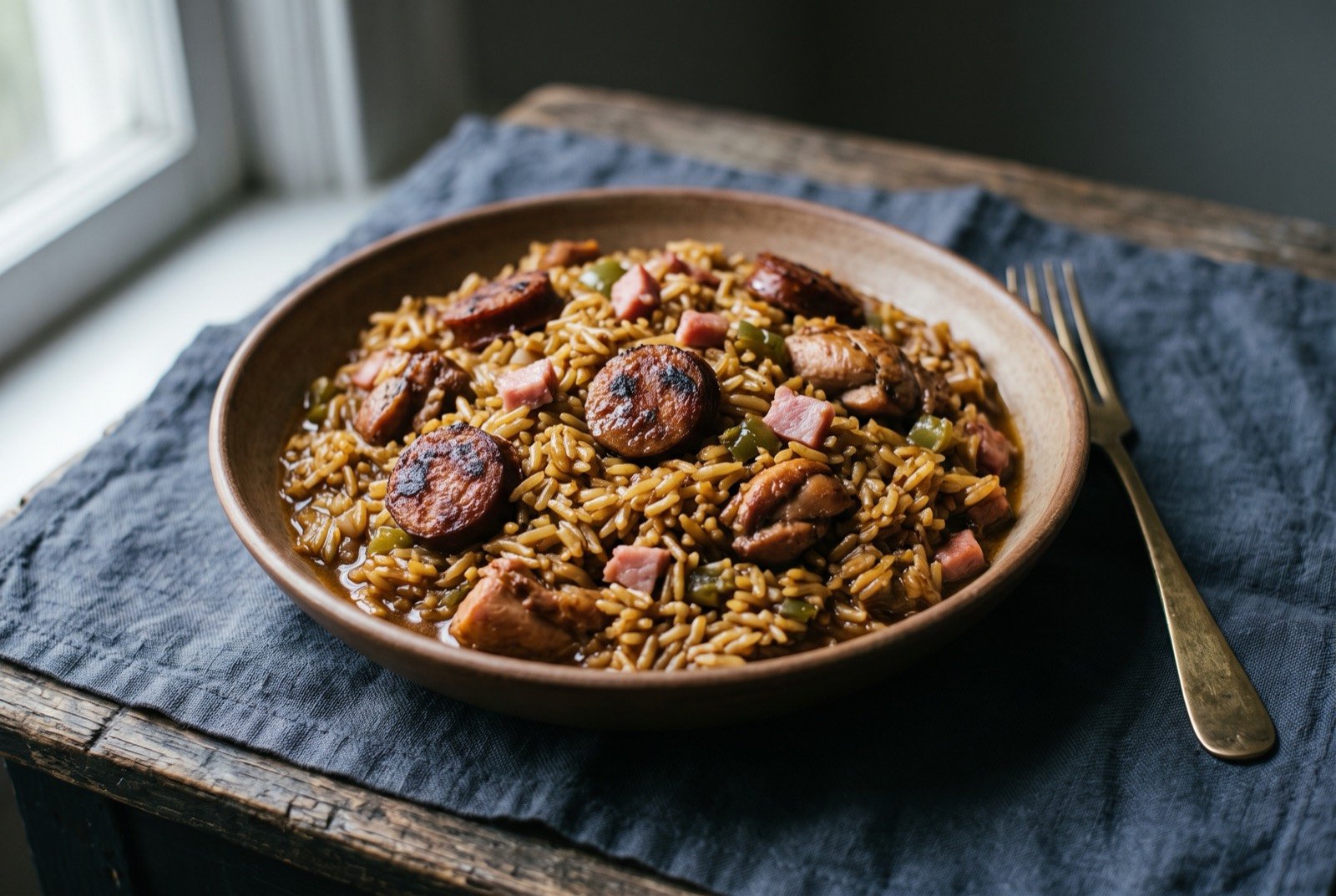
An illustration of the dish, not a photograph of it cooked.
- Time
- Not statedNo source states a time and the atlas has too few comparable dishes to estimate one.
- Researched
- No outside sources linked
- Reviewed
- Not yet reviewed from inside the tradition
- Cooked
- Not yet cooked and reported
As tradition built it
Jambalaya, Cajun Brown and Creole Red
George Graham's Cajun pork jambalaya method; Creole red per 64 Parishes
Ingredients
An outline, not yet a recipe: the tradition's method with its ingredients named but not weighed. Quantities are being added from sources inside the tradition, lead dishes first.
Cajun (brown)
- 4 strips, chopped bacon
- 2 cups, chopped pork butt
- 1 cup, sliced andouille
- 1 cup, diced tasso
- 1 cup, diced ham
- 1/2 cup beer, to deglaze
- 4 cups stock
- 4 cups long grain rice, uncooked
Creole (red)
- trinity and meats, as for the Cajun version
- 2 x 10oz cans crushed tomatoes, plus 1/4 cup tomato purée tomatoes
Method
Cajun, or brown
- Brown bacon, pork butt, andouille, tasso and ham together in a cast iron pot until well caramelised, this browning itself the source of the dish's bronze colour and depth.
- Deglaze with beer, then add stock in a one to one ratio with uncooked long grain rice by volume, George Graham's own recipe uses four cups of each, since the accumulated pan juices, beer and meat drippings supply extra liquid beyond the stock alone.
- Lid on tight, into a 400°F oven for one hour, and critically, undisturbed: stirring once the rice has gone in turns it mushy and starchy.
Creole, or red
- Layer tomatoes in alongside the trinity and meats, developed in and around New Orleans and reflecting the city's Spanish and African influences.
Notes
64 Parishes names Lafcadio Hearn's 1885 La Cuisine Creole as Louisiana's earliest documented jambalaya recipe, and compares the dish, without resolving the etymology, to Spanish paella and West African jollof rice as ancestral cousins.
What a modern chef changes
Separately browned meats and rice cooked apart
Method
- For the Cajun style, brown the meats separately and precisely, the andouille and tasso hard and fast over direct Big Green Egg heat for real caramelisation, the pork butt held lower and gentler so it does not toughen, then combine only once the rice goes into the oven, a genuine refinement on the traditional single-pot browning that currently treats every cut the same way.
- For the Creole style, dehydrate a portion of the tomato before it enters the pot, concentrating its sweetness rather than adding further liquid to a dish that is already managing a precise rice to stock ratio.
- In both versions, cook the rice separately by absorption in a properly reduced, well seasoned stock, then fold the meat and vegetable mixture through at the very end, for grains that hold real shape rather than the softer, more stewed texture the traditional one-pot method gives, an approach this atlas has used for other one-pot rice dishes elsewhere.