The Southern Cone · Volume 27, Cassava, Maté and the Chaco's Second Kitchen
Tereré
Eastern Paraguay
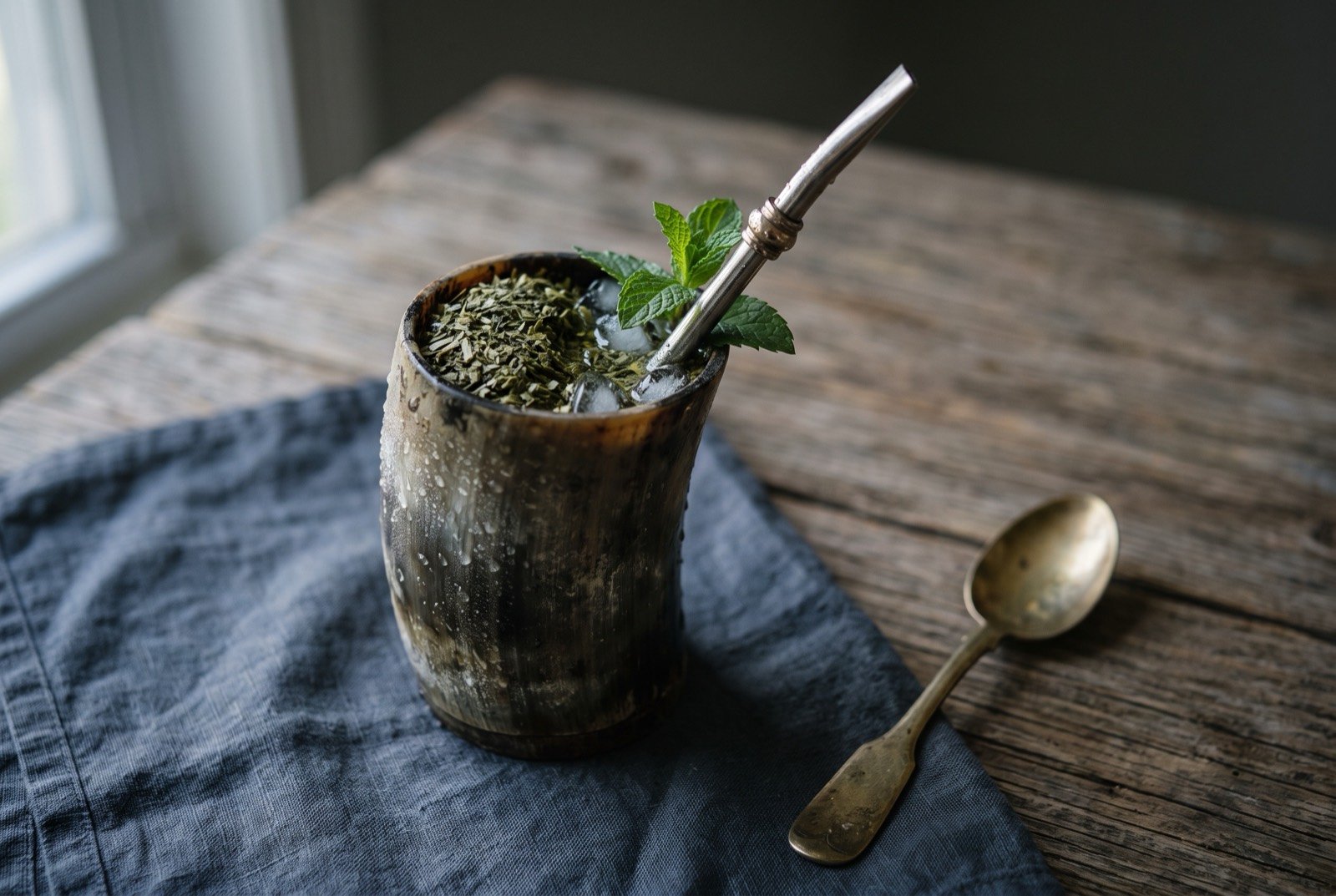
An illustration of the dish, not a photograph of it cooked.
- Time
- About 30 minutes to 5 hours 30No source states a time. Comparable dishes in this atlas take this long.
- Researched
- 49 sources cited
- Reviewed
- Not yet reviewed from inside the tradition
- Cooked
- Not yet cooked and reported
Declared cultural heritage by Ley Nº 4261/11 and inscribed by UNESCO as Intangible Cultural Heritage of Humanity. UNESCO
As tradition built it
A few minutes to prepare. Drunk continuously, shared and refilled through the day.
Ingredients
- half to two thirds of a guampa yerba mate, filling a guampa roughly half to two thirds
- up to 3 fresh yuyos (herbs), per the guidance of one Paraguayan yuyero
- 1 to 5°C iced water
Method
- Fill a guampa (traditionally a hollowed horn) roughly half to two thirds with yerba mate.
- Crush fresh yuyos, no more than three per preparation, in a mortar (angu'a) and mix into iced water, 1 to 5°C, in a jug or thermos.
- Pour the cold, herb-infused water over the yerba and drink through a bombilla.
- Refill the guampa each time it empties and pass it to the next person in the group, the circulation being the socially central act.
- Re-infuse the same yerba eight to twelve times before it is spent.
What a modern chef changes
A blended, strained yuyo base, understood through cold-extraction chemistry
Rung 5
Method
- Blitz the fresh yuyos briefly with a little of the iced water in a high power blender, then strain through a chinois into the rest of the water, rather than floating whole sprigs, for a cleaner, more even extraction of the herbs' own flavour compounds. This is the chapter's own extrapolation from the sourced cold-extraction mechanism, not a documented Paraguayan technique, and is offered as a version of the ritual the reader's kit makes possible, not a discovered tradition. Rung 5.
- Understand, and if wanted explain to guests, why the cup reads smoother than hot mate: cold water extracts less caffeine and fewer bitter compounds than hot water at a comparable yerba-to-water ratio, which is the actual chemistry behind tereré's reputation as the gentler, more sociable version of the same plant.