The Southern Cone · Volume 27, Cassava, Maté and the Chaco's Second Kitchen
Reviro
Eastern Paraguay, particularly Alto Paraná
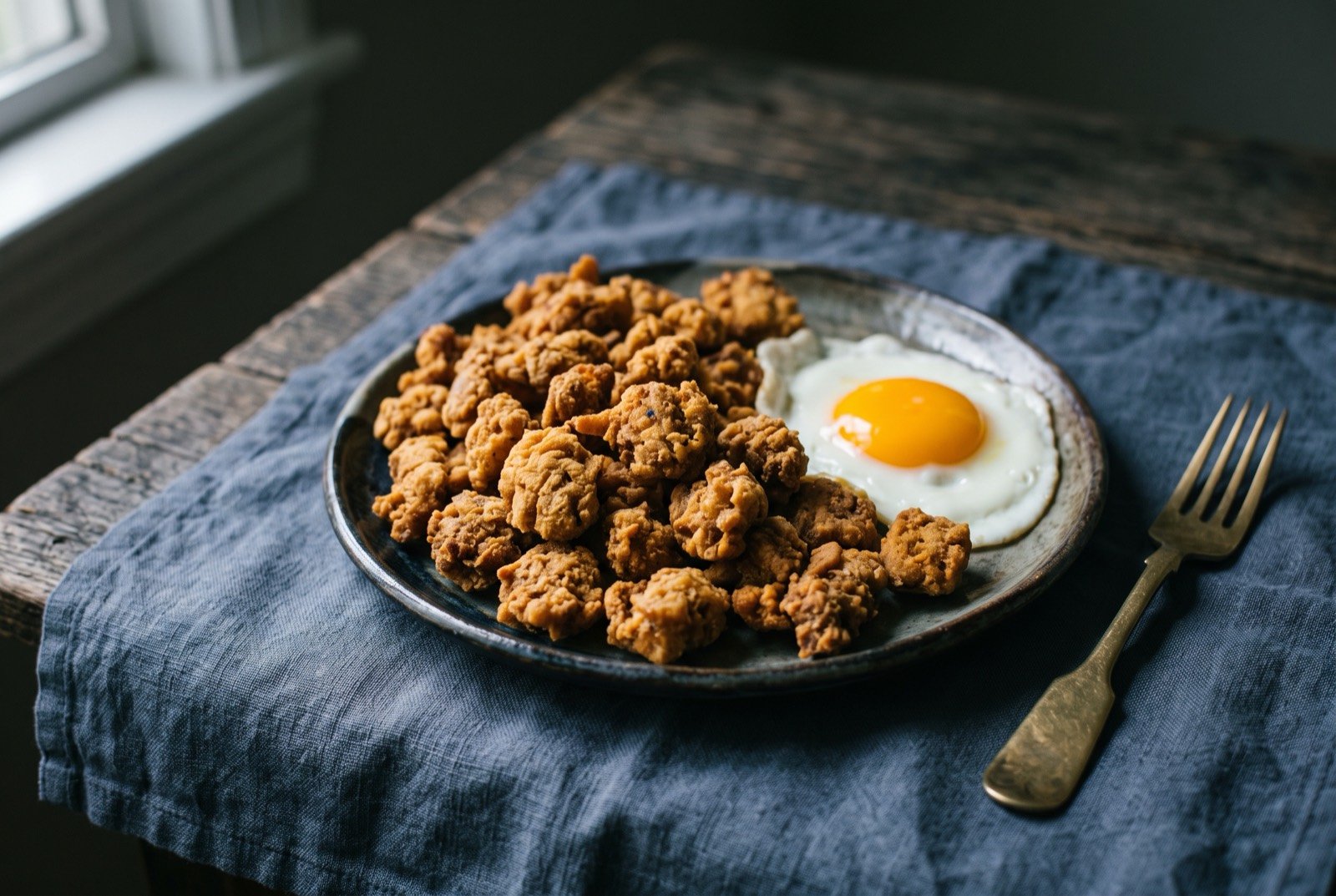
An illustration of the dish, not a photograph of it cooked.
- Time
- 20 minutes
- Researched
- 49 sources cited
- Reviewed
- Not yet reviewed from inside the tradition
- Cooked
- Not yet cooked and reported
Associated specifically with mensú, itinerant yerba mate labourers of the Paraná forest, on both the Paraguayan and Argentine sides. A folk legend attributes its invention to a mother's tears falling into a flour mixture out of desperation at not being able to feed her children better; this chapter treats the legend as colour rather than history.
As tradition built it
Serves 4. About 20 minutes.
Ingredients
- 1kg wheat flour
- 1 tbsp salt
- 500ml water
- 150ml oil
Method
- Work the wheat flour, salt, water and oil by hand into a firm dough.
- Break the dough into pieces and fry until golden.
- Serve traditionally with fried eggs, or with cocido, a toasted, sometimes deliberately near-burnt, black mate infusion.
Notes
Quantities sourced to a Paraguayan home cook's own recipe, low to moderate confidence.
What a modern chef changes
A more controlled fry, and the accompanying cocido treated with the same cold-extraction logic as tereré
Rung 5
Method
- Fry at a genuinely held, stable oil temperature rather than a variable domestic hob flame, for an even, non-greasy crust across every piece.
- Serve alongside a properly extracted cocido, understanding that its toasted, near-burnt character is a deliberate flavour choice, not a mistake, and that the same yerba mate chemistry that governs tereré's cold extraction (Rung 5) governs how bitter or smooth a hot cocido reads.