The Southern Cone · Volume 27, Cassava, Maté and the Chaco's Second Kitchen
Chipa
Eastern Paraguay
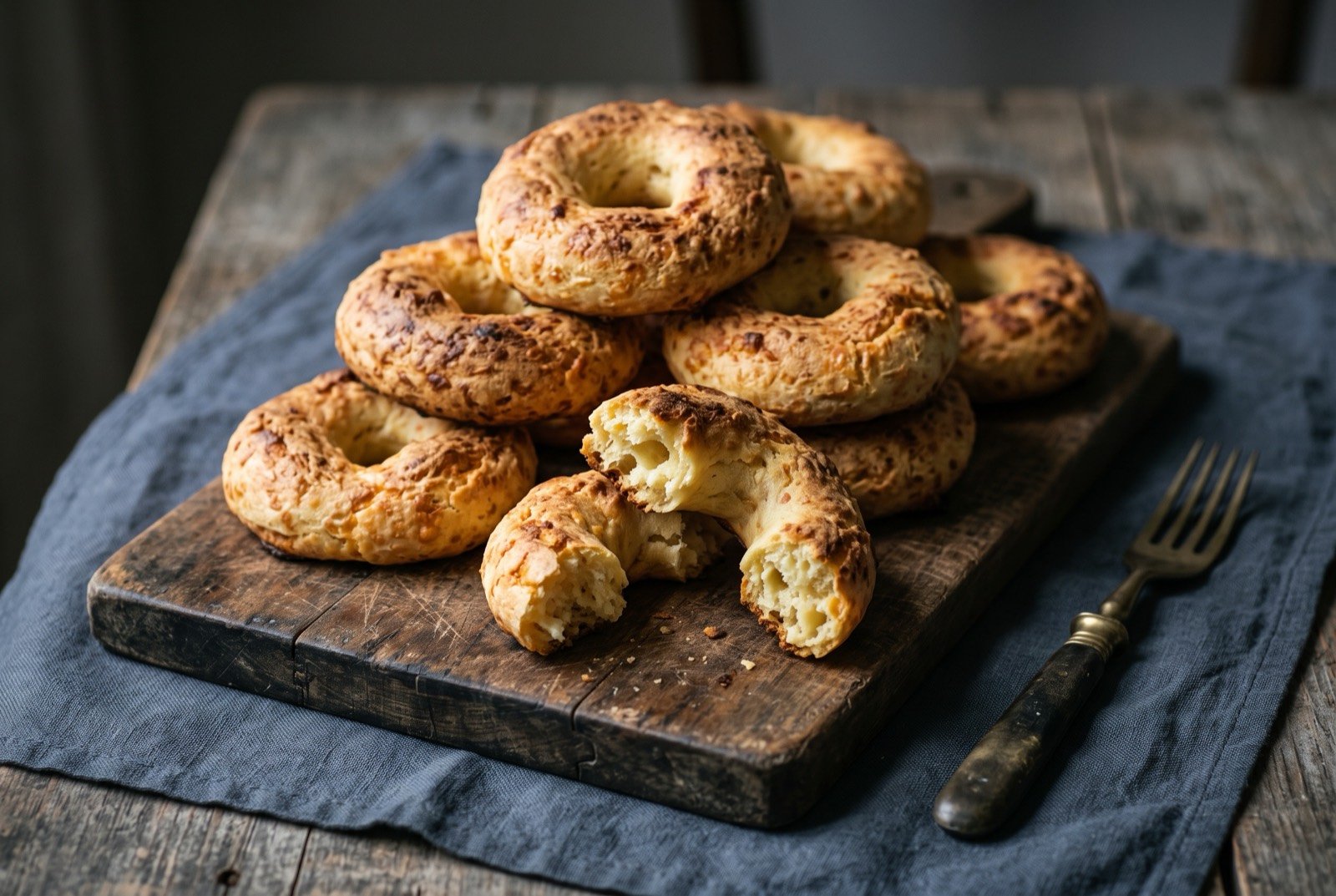
An illustration of the dish, not a photograph of it cooked.
- Time
- Hands on 1 hour · Waiting 8 hours
- Researched
- 49 sources cited
- Reviewed
- Not yet reviewed from inside the tradition
- Cooked
- Not yet cooked and reported
Roughly seventy documented regional and family variants exist, per historian Margarita Miró Ibars, whose 2001 study Alimentación y religiosidad paraguaya: Chipa, pan sagrado treats the bread as an element of creole religiosity in its own right. ABC Revista
As tradition built it
Makes a full batch of dough, roughly 5kg, the scale a Paraguayan household actually bakes at. About 1 hour, plus overnight resting where a household has time.
Ingredients
- 2kg almidón dulce (sweet cassava starch)
- 500g maize flour
- 14 eggs
- 400g pork fat (grasa de cerdo), softened
- 1.5kg queso Paraguay, grated or crumbled
- to taste salt, to taste
- 1 tbsp aniseed, optional, per some regional variants
Method
- Work the pork fat into the cassava starch and maize flour by hand or in a stand mixer until evenly distributed, no visible lumps of fat remaining.
- Beat in the eggs, then the queso Paraguay, kneading until you have a smooth, dense, only slightly sticky dough.
- Rest the dough if time allows; many households make the dough the night before Easter baking.
- Shape into rings, ovals or the small rolls each family favours.
- Bake in a preheated oven or tatakua, an initial strong blast of heat, 200 to 220°C for 25 to 30 minutes, described in Paraguayan sources as essential to the texture; the Guaraní-language source for this chapter gives 250°C specifically for the meat-filled chipa so'o variant, at roughly 7cm dough thickness.
Notes
Halve or quarter the ratios above for a smaller batch; they scale linearly.
What a modern chef changes
An emulsified fat-and-cheese base, and a Big Green Egg cured like a tatakua
Rungs 1, 2 and 3
Method
- Emulsify the fat and a fresh home-made queso Paraguay curd together in a high power blender before working them into the starch, rather than adding each separately by hand. This directly addresses the patchy, greasy-in-places result that uneven fat distribution causes in most home chipa. Rungs 1 and 2.
- Bake on a Big Green Egg set up and cured exactly as a tatakua would be: fully stabilise the ceramic and deflector plate at temperature before loading, use a fruit or oak wood rather than anything resinous, and let the food cook from the stored thermal mass rather than live flame. Rung 3.
- Dry a portion of the home-made curd in a dehydrator for a firmer, more concentrated cheese note in some of the batch, offering a textural contrast against the standard soft curd used in the rest.