Britain and Ireland · Volume 37, South Asian and Caribbean Britain
Chicken Jalfrezi
Bengal, by way of the British curry house
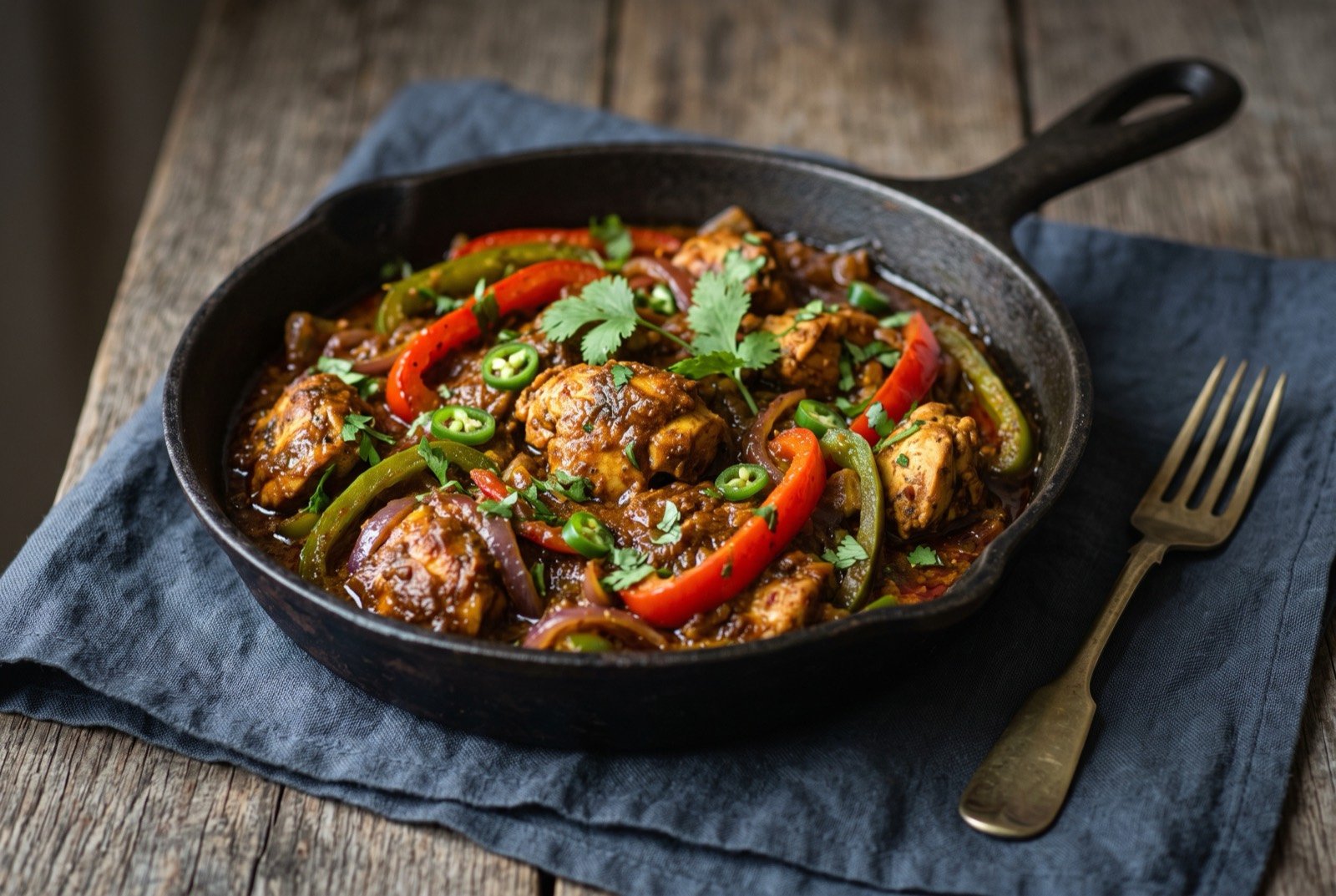
Illustration
- Time
- 30 minutes
- Researched
- 4 sources cited
Jalfrezi's real roots trace to Bengal under the Raj, a way of stretching leftover meat by stir-frying it hard and fast; it is now rare in restaurants in India itself, which makes the British curry house version a genuine repurposing of a real but marginal dish rather than either a pure invention or a straight import.
As tradition built it
Serves 4. About 30 minutes.
Ingredients
- 500 ml base gravy
- 500 g chicken breast, sliced
- 1 red pepper, sliced
- 1 green pepper, sliced
- 1 onion, sliced
- 2 green chillies, sliced
- 1 tsp ground cumin
- 1 tsp ground coriander
- 1 tbsp tomato purée
- as needed vegetable oil
- a small handful fresh coriander, to finish
Method
- Fry the chicken in hot oil until sealed and lightly coloured, 4 to 5 minutes, and set aside.
- In the same pan, fry the onion, red pepper and green pepper hard and fast, 3 to 4 minutes, keeping real bite in them.
- Add the cumin, coriander and tomato purée, and cook 1 minute.
- Add the base gravy and green chillies, and simmer 5 minutes.
- Return the chicken to the pan, and simmer a further 5 minutes until cooked through, the sauce staying thick and clinging rather than thin.
- Finish with fresh coriander.
What a modern chef changes
The base gravy varied by finish, exactly as the trade's own logic intends, made deliberate rather than accidental.
Rung 1.
Method
- Cook the peppers and onion separately, at very high heat in a wide pan, before they ever meet the sauce, so they keep the sharp, just-charred bite jalfrezi is meant to have rather than softening into the gravy.
- Reduce a portion of the frozen base gravy specifically harder for this dish than for a milder one, thickening it further so the finished sauce clings rather than pools, the single clearest demonstration in this chapter of one stock doing genuinely different work depending on how it's finished.
- Add the green chilli in two stages, half early and half at the very end, for a dish with real early heat and a fresher, sharper chilli note on top of it, rather than one flat level of heat throughout.