The Sinosphere · Volume 35, The Sour Jar, the Steam Funnel and a Border That Runs Both Ways
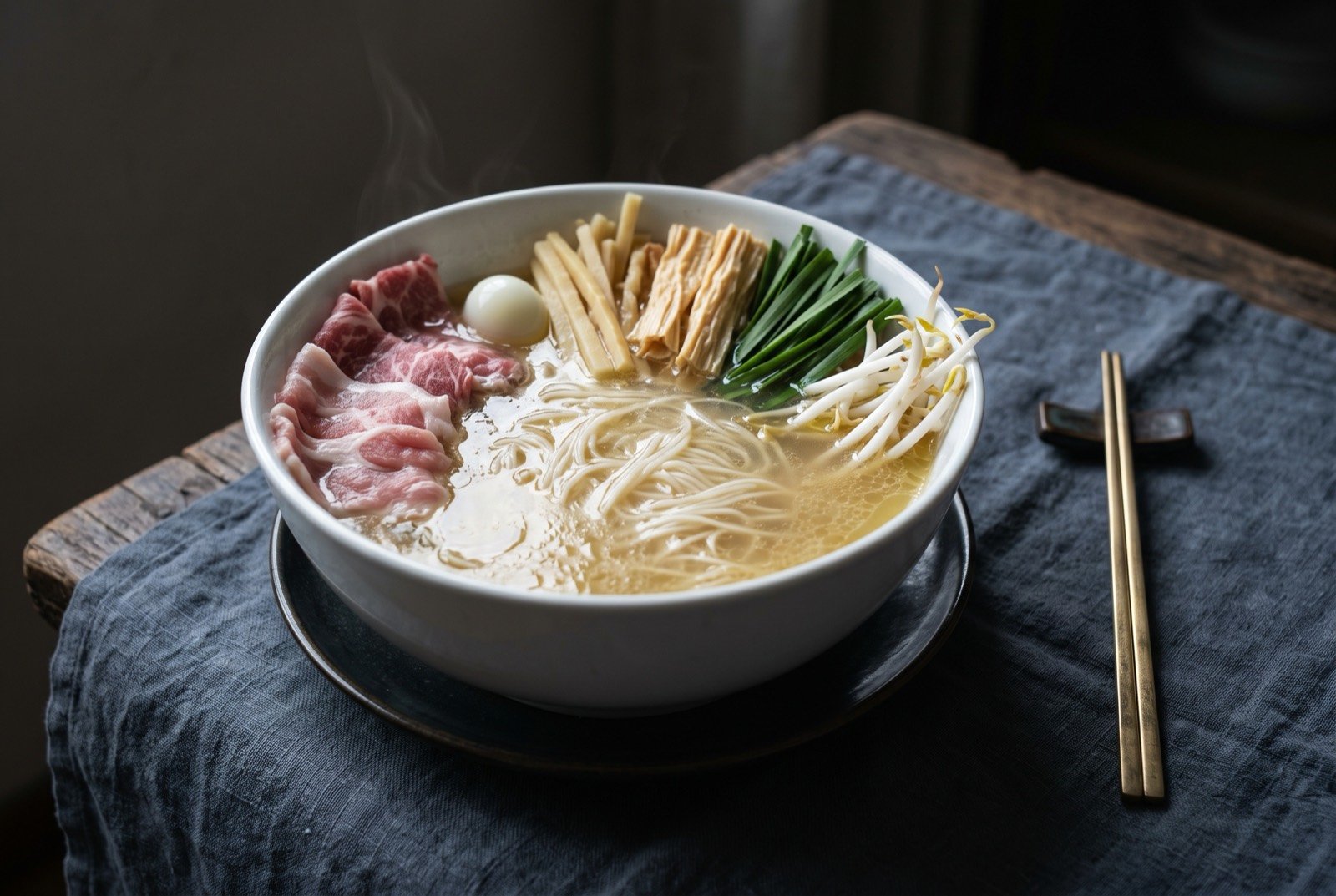
Guoqiao mixian, crossing-the-bridge rice noodles
Mengzi and Jianshui, Honghe prefecture, Yunnan
Illustration
- Time
- 3 hours
- Researched
- Researched from 107 sources in the brief
Mengzi and Jianshui, Honghe prefecture, Yunnan. A precision-cooking technique disguised as folklore.
As tradition built it
Serves 4. Broth: 2 to 3 hours. Assembly: 15 minutes.
Ingredients
- 1 old hen or black-boned (silkie) chicken, jointed
- 300 g pork or ham bone
- 2.5 litres water
- 200 g Xuanwei or Nuodeng-style ham, or jamón serrano, thinly sliced (see Sourcing)
- 6 slices pork loin, sliced paper-thin
- 6 slices beef, sliced paper-thin
- 6 slices bamboo shoot
- 20 g dried matsutake or dried porcini, thinly sliced
- 30 g fresh beancurd skin, cut into strips
- 3 quail eggs
- 100 g fresh chives, cut into short lengths
- 100 g bean sprouts
- 30 g pickled mustard stem, sliced
- 300 g dried thin rice noodles (mixian), or fresh if available
Method
- Simmer the chicken and bone in the water for at least ninety minutes, skimming impurities but leaving the rendered fat floating on the surface rather than skimming it off. This fat layer is the entire mechanism of the dish.
- While the broth simmers, arrange every raw and quick-cooking ingredient (meats, egg, bamboo shoot, beancurd skin, matsutake, chives, sprouts, pickled stem) on separate small plates, since everything must be ready to add in sequence the moment the broth is served.
- Scald the rice noodles briefly in boiling water and drain, keeping them separate from the broth until the final step.
- Bring the finished broth to a full simmer and ladle it, fat layer intact, into a large, deep bowl. It must be visibly steaming, close to boiling.
- Add the raw ingredients in strict order: the sliced ham, pork loin, beef and quail eggs first, while the broth is hottest and can actually cook them through; then bamboo shoot, matsutake and beancurd skin; then chives, bean sprouts and pickled mustard stem; then the noodles last, so they do not sit and soften. Stir gently between each addition and eat immediately.
What a modern chef changes
The fat seal, held by a thermometer instead of a folk rule.
Rung 1
Method
- Reduce the strained broth further and hold it at a measured 96 to 98°C in a wide pan or bain-marie rather than judging "hot enough" by eye, using a probe thermometer to confirm the temperature before assembly.
- Poach the quail eggs separately, sous vide, at 63°C for 45 minutes to a soft-set yolk with a fully food-safe white, then add them to the bowl already cooked rather than relying on the broth's residual heat to finish a raw egg, a genuine safety improvement over the traditional method for a UK kitchen.
- Slice the pork loin and beef on a meat slicer or with a well-chilled blade for genuinely even, paper-thin cuts, so every slice cooks through in the same few seconds once dropped into the broth, rather than some pieces remaining underdone.
- Serve the garnish plates with a small dusting of dehydrated edible flower petals (rose or day-lily, dried in a home dehydrator at low heat), a direct nod to the flower-eating tradition named in the Flavour Arsenal above, added at the very end for colour and aroma rather than cooked into the broth.