The Sinosphere · Volume 35, The Sour Jar, the Steam Funnel and a Border That Runs Both Ways
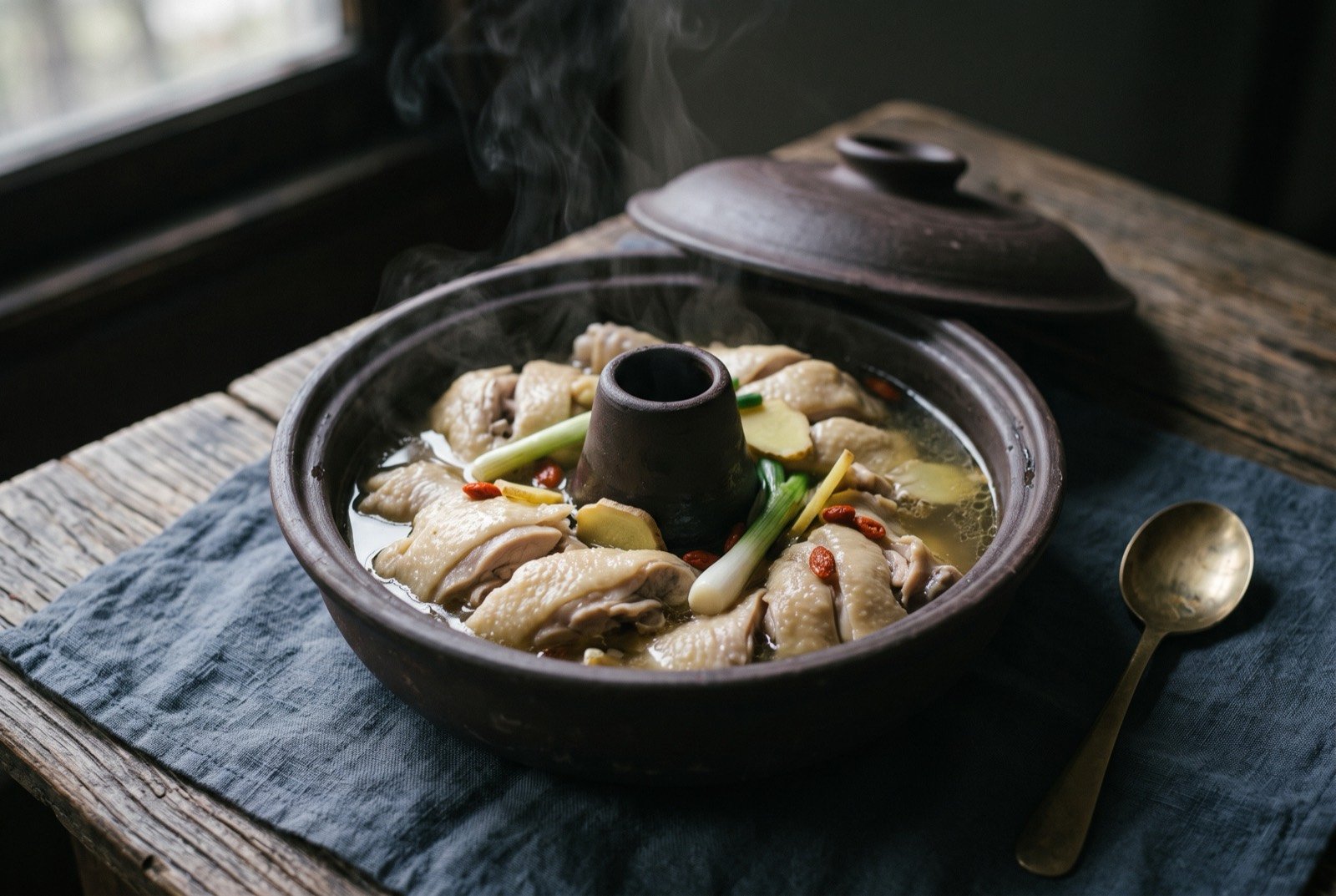
Qi guo ji, Jianshui steam-pot chicken
Jianshui, Honghe prefecture, Yunnan
Illustration
- Time
- 3 hours
- Researched
- Researched from 107 sources in the brief
Jianshui, Honghe prefecture, Yunnan. A sealed vessel that cooks on condensation alone.
As tradition built it
Serves 4. 2.5 to 3 hours.
Ingredients
- 1 whole chicken, jointed into pieces, bone in
- 5 slices ginger
- 2 spring onions, cut into lengths
- 1 tsp salt
- 1 tbsp Shaoxing wine or a dry sherry
- 1 a Jianshui-style unglazed purple-clay steam pot, or a stacked bamboo steamer over a wide pan of water
Method
- Pack the chicken pieces, ginger, spring onion, salt and wine into the steam pot's inner chamber. Add no water or stock directly to the chicken at any point.
- Seat the pot over a wide pan of vigorously boiling water so that steam rises through the pot's central funnel and condenses inside, dripping back down over the chicken.
- Cover tightly and steam for 2.5 to 3 hours, topping up the boiling water below as it evaporates, never letting the pan below run dry.
- The chicken will produce its own clear, deeply flavoured broth entirely from condensed steam and its own juices. Serve straight from the pot.
What a modern chef changes
The same closed system, held to a measured temperature.
Rung 4
Method
- Vacuum-seal the chicken with the aromatics and a single tablespoon of Shaoxing wine, then cook sous vide at 75°C for 3 hours, a closed system in a different vessel, achieving the same slow, self-basting result with precise, repeatable timing.
- Reduce a portion of the bag juices in a separate pan with a high-power blender's worth of blitzed ginger and spring onion, straining through a chinois for a clear, concentrated finishing sauce poured back over the chicken at the table.
- Add a small measure of dried matsutake, rehydrated and finely sliced, to the sealed bag before cooking, echoing the tonic-ingredient version of the dish developed in twentieth-century Kunming, which added notoginseng and other tonic roots to the pot.