France and the Alps · Volume 14, The Duck and the Border
Magret de Canard
Gascony, Auch
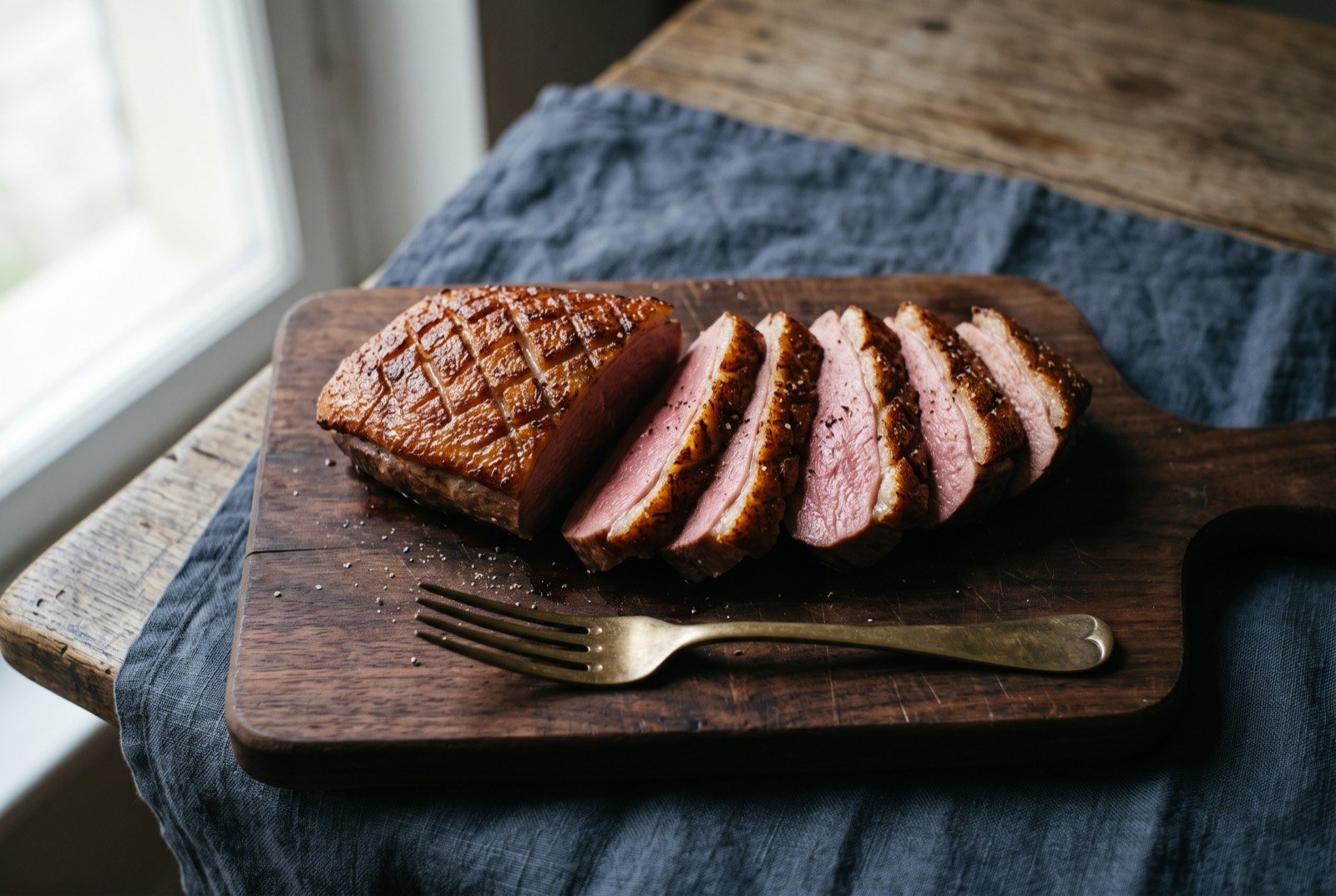
An illustration of the dish, not a photograph of it cooked.
- Time
- 15 minutes
- Researched
- 20 sources cited
- Reviewed
- Not yet reviewed from inside the tradition
- Cooked
- Not yet cooked and reported
Before Daguin, the breast of a fattened duck was reserved for confit; treating it as a standalone seared cut, rare to rosé, is a genuinely modern idea that reorganised the whole regional duck industry around demand for it.
As tradition built it
Serves 2. About 15 minutes, plus resting to room temperature.
Ingredients
- 1 duck breast, fat scored in a crosshatch
Method
- Bring the duck breast to room temperature, 30 to 60 minutes.
- Start skin-side down in a cold pan, per Rung 2, so the fat renders gradually.
- Once crisp, flip, cook the flesh side about 2 minutes for rare to rosé.
What a modern chef changes
The rendering stage controlled more precisely, and the resting stage extended.
Rung 2
Method
- Weigh the breast and calculate rendering time from its thickness rather than a fixed number of minutes, since a thicker breast needs a longer cold-start render to crisp fully before the flesh side overcooks.
- Rest the cooked breast under foil for a full 5 minutes before slicing, longer than many home versions allow, so the juices redistribute evenly.
- Deglaze the resting pan with a small measure of Armagnac, per Rung 4, off the heat, for a two-minute sauce that uses the very fat just rendered rather than discarding it.