France and the Alps · Volume 14, The Duck and the Border
Piperade
Béarn and the French Basque Country
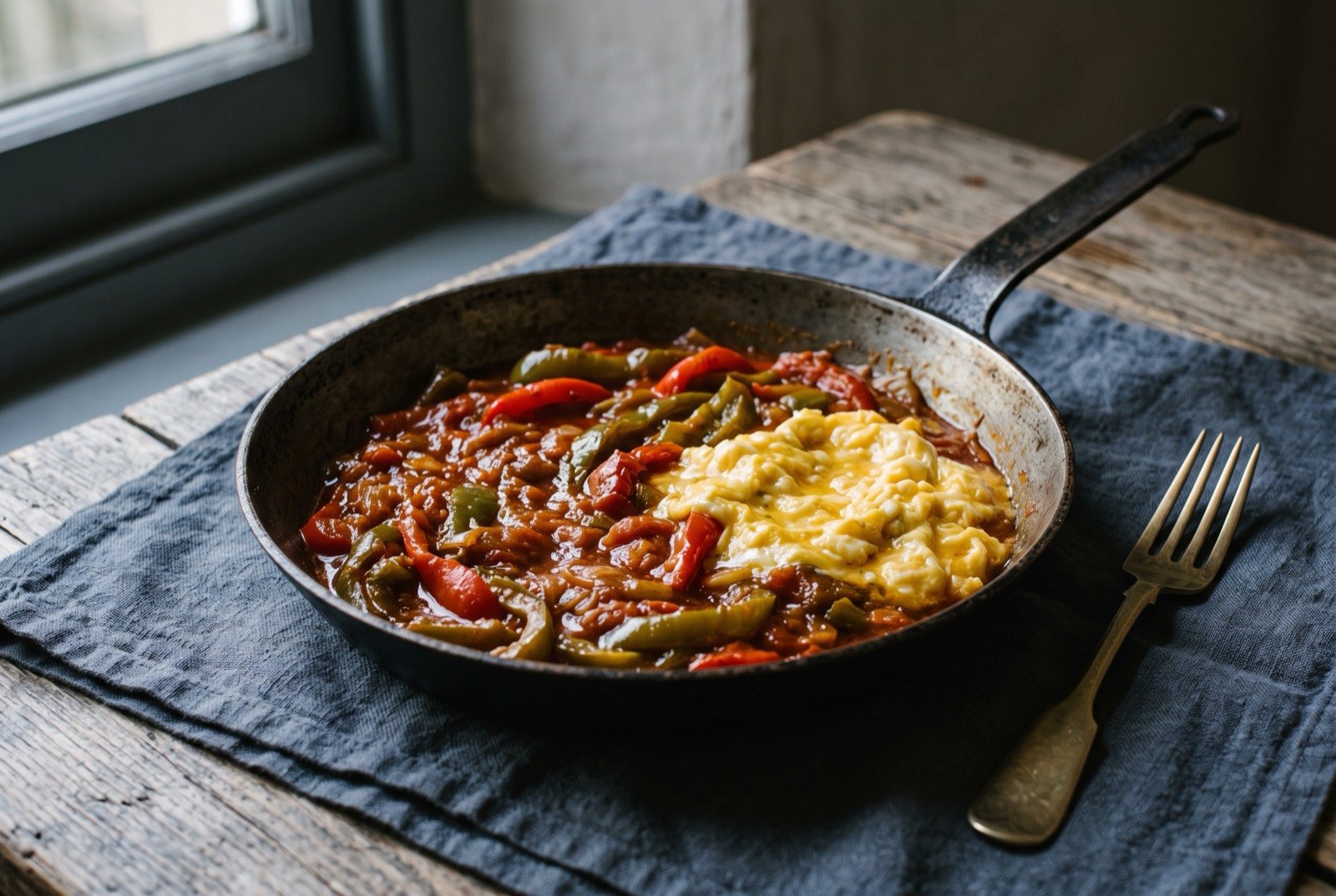
An illustration of the dish, not a photograph of it cooked.
- Time
- 45 minutes
- Researched
- 20 sources cited
- Reviewed
- Not yet reviewed from inside the tradition
- Cooked
- Not yet cooked and reported
The name most likely derives from Béarnese piperada, pepper dish, and multiple sources describe it as conceived in Béarn before being adopted into Basque cooking. Whether the egg is traditionally scrambled through the base or served fried on top is a genuinely live, unresolved variation, not a settled point of authenticity, and this chapter does not pick a side.
As tradition built it
Serves 4. About 45 minutes.
Ingredients
- 280 g sweet green peppers
- 400 g onions
- 3 cloves garlic
- 400 g red peppers
- 600 g tomatoes
- pinch of each, plus 2 to 4 tsp Espelette pepper sugar, salt, pepper, Espelette pepper
- 4 to 8 egg, 1 to 2 per person
Method
- Sweat the onion, 5 to 7 minutes, add garlic, 1 minute.
- Add the sweet green peppers and red peppers, soften, about 15 minutes.
- Add the tomatoes with a pinch of sugar, salt and pepper, cover and cook to a jammy, glazed consistency, 20 to 25 minutes.
- Add Espelette pepper right at the end, per Rung 6.
- Fold egg through, or serve fried on top, per household preference.
What a modern chef changes
The pepper base's texture and the egg's texture treated as two separate problems.
Rung 6
Method
- Reserve the Espelette pepper entirely until plating, tasting and adjusting it dish-side rather than cooking it in at all, the most literal possible application of Rung 6.
- Cook the egg completely separately, a soft, barely-set scramble or a fried egg with a runny yolk, and combine only at the table, so neither element overcooks waiting for the other.
- Pass a portion of the pepper base through a chinois for a smoother, more sauce-like element alongside the chunkier remainder, a textural contrast the traditional single-pot method does not offer.