West Africa · Volume 02, The Cassava-and-Bitter-Leaf Belt
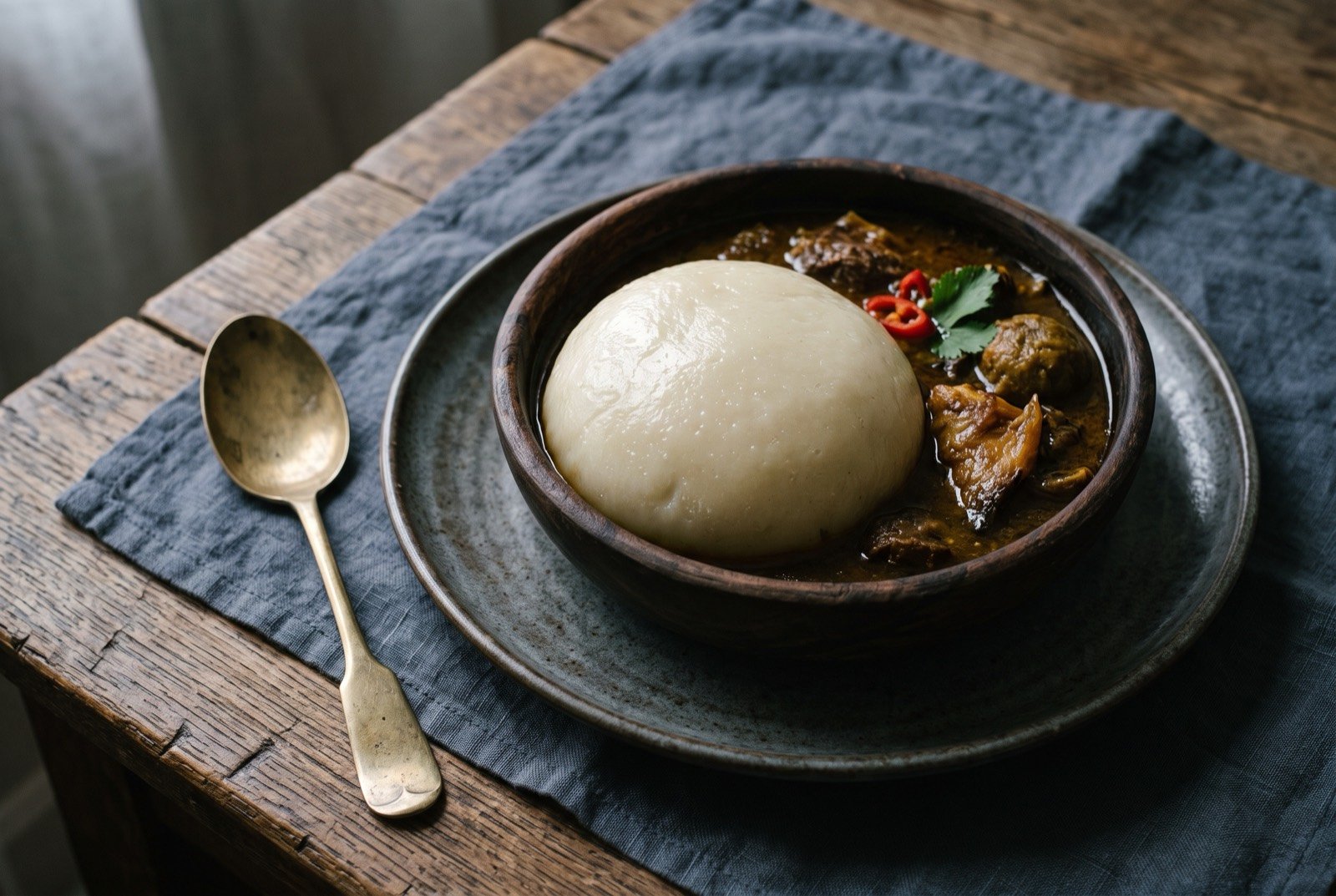
Foofoo, dumboy and fufu
The pounded cassava swallow, under three names, and the clearest technical distinction in the whole cassava family
Illustration
- Time
- 45 minutes
- Researched
- Researched from 133 sources in the brief
As tradition built it
Serves 4. About 45 minutes plus pounding.
Ingredients
Method
- Rinse and boil peeled fresh cassava chunks in water, about 20 minutes, until soft; drain and cool slightly.
- Pound in a large wooden mortar and pestle while still warm and workable. This is described in Liberian sourcing as requiring rhythm, strength and teamwork, often involving multiple family members who take turns or work in unison, a harder and longer pound than the fufu documented in other cassava-growing regions of this atlas.
- If the mass dries out while pounding, wet the pestle lightly rather than adding water to the mash directly, which would loosen the dough past the point of holding shape.
- Shape into balls or a mound and serve as the starch base for palm butter, groundnut or pepper soup.
What a modern chef changes
The pounding mechanised without losing the texture it exists to produce
Method
- A stand mixer with a dough hook is a workable substitute for volume, though it will not fully replicate the sticky, elastic result of a proper two-person hand pound; know this is a real trade-off, not a free equivalent.
- Hot pounding is what gives the paste its cohesive, elastic swallow texture. Boiling gelatinises the cassava starch, and pounding while still hot works that gelatinised starch into a smooth, stretchable mass that will not fall apart into grit when torn and dipped into soup. Do not let the cassava cool fully before pounding, whichever method you use.