The Indian subcontinent · Volume 15, The Trami, the Boti and a Kitchen Split Three Ways
Tabak maaz
Kashmir Valley, Muslim tradition
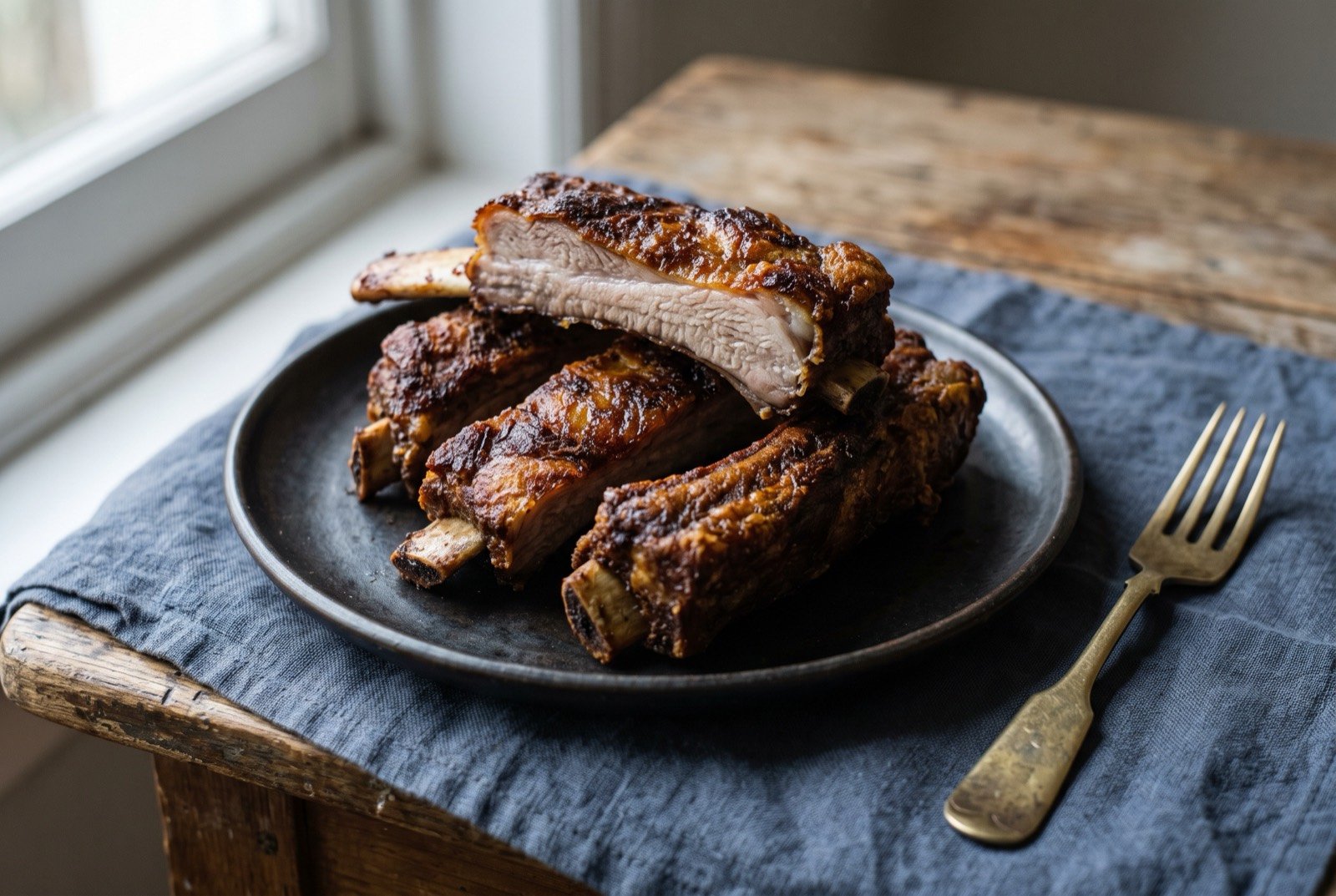
An illustration of the dish, not a photograph of it cooked.
- Time
- Hands on 2 hours 30 · Waiting 8 hours
- Reviewed
- Not yet reviewed from inside the tradition
- Cooked
- Not yet cooked and reported
Twice-cooked lamb ribs, one of the seven dishes that recur across every account of Wazwan as indispensable. The technique, a gentle milk braise followed by a hard fry, is the one part of this dish no source disputes; the exact quantities below are assembled from lifestyle and diaspora coverage rather than a Kashmir-published recipe, which this chapter has not been able to find, and should be read with that caveat.
As tradition built it
Serves 4. Overnight marinating, then about 2.5 hours.
Ingredients
- 1 kg lamb ribs
- 200 g yoghurt
- 1 tbsp grated ginger
- 1 tbsp ground fennel
- 1/2 tsp turmeric
- to taste salt
- 500 ml milk
- 500 ml water
- 1 bay leaf
- 4 green cardamom pods
- 1 (5cm) cinnamon stick
- 4 cloves
- a generous depth ghee, for frying
Method
- Marinate the lamb ribs overnight in the yoghurt, grated ginger, ground fennel, turmeric and salt.
- The next day, simmer the ribs in a pan with the milk, water, bay leaf, cardamom, cinnamon and cloves, covered, for around 2 hours, until the meat is fully tender and pulling from the bone.
- Lift the ribs out and pat them completely dry, this step matters more than any other in the dish.
- Shallow fry in a generous depth of ghee at a high heat, roughly 160°C, for 2 to 3 minutes a side, until the surface is deeply golden and crisp.
- Serve immediately, whole, as one of the meal's first meat courses.
What a modern chef changes
A sous vide braise, a dehydrator dry and a Big Green Egg fry
Builds on rungs 2 and 3
Method
- Braise sous vide. Replace the stovetop braise with a sous vide bath at 85°C for 4 hours, long enough for full collagen breakdown without the ribs falling apart before they are meant to.
- Dry in a dehydrator. Dry the ribs for 20 minutes rather than with a cloth alone, removing more surface moisture than patting can and giving a more even, blister-free crisp at the fry stage.
- Fry on the Big Green Egg. Fry on the flat side of the plate setter at a controlled, very high heat for extra smoke character a domestic pan cannot give.
- Reduce the braising milk. Strain it through a chinois and reduce into a thin sauce, spooned underneath the ribs rather than discarded, so the collagen and spice that went into the braise are not wasted.