The Indian subcontinent · Volume 18, The Ilish, the Chhena and a Border the Kitchen Never Kept
Shukto
West Bengal
Illustration
- Time
- 45 minutes
- Researched
- Researched from 168 sources in the brief
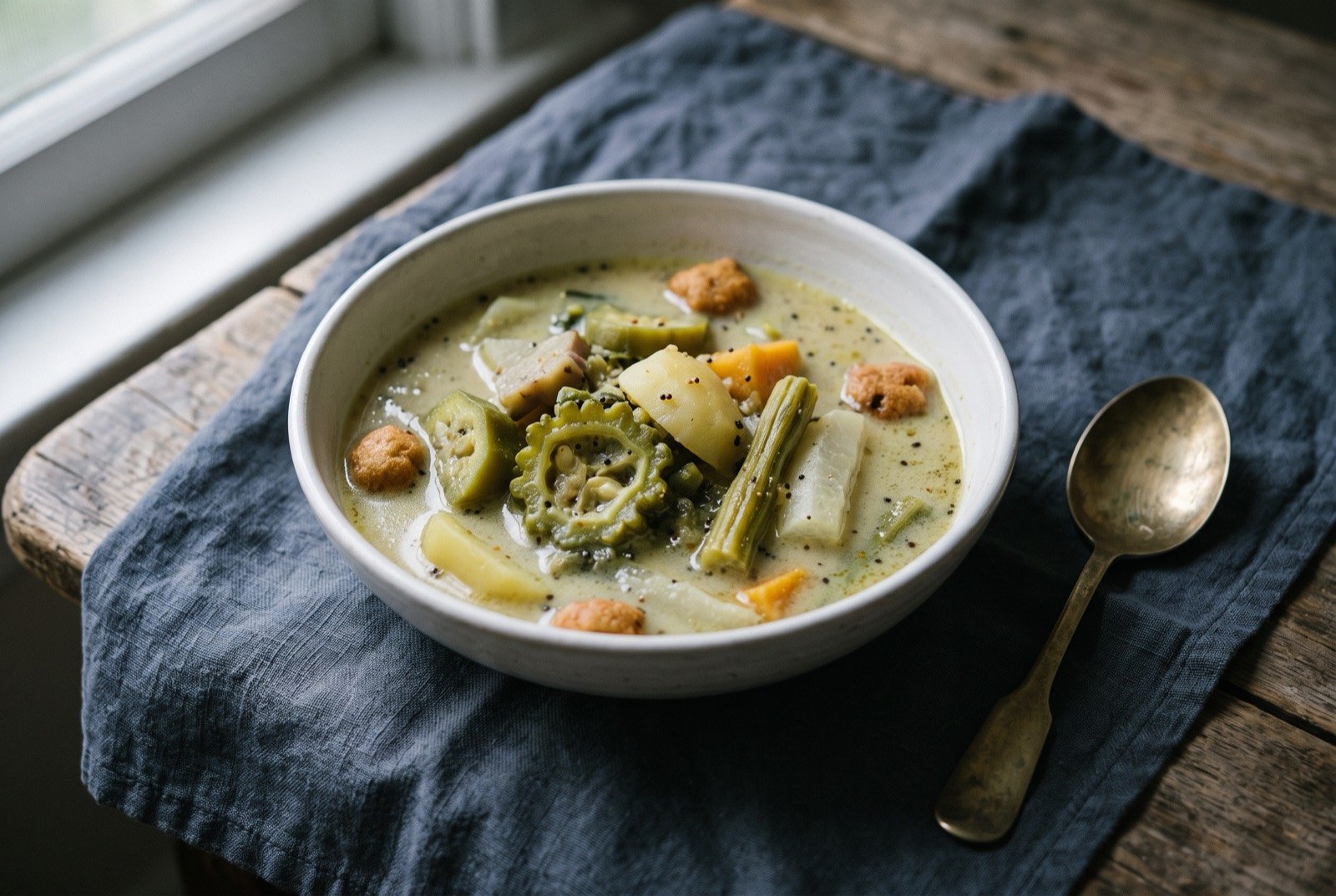
A mixed vegetable dish built around bitter gourd and drumstick, joined by plantain, aubergine, sweet potato, potato and beans, bound with mustard and radhuni paste, cooked in mustard oil, finished with milk and ghee, textured with bori, sun-dried lentil dumplings. It opens, rather than accompanies, a full Bengali Hindu meal, and a folk saying holds that no meal is complete without it alongside dal. This chapter could not find a single quantity-complete shukto recipe from a directly read, credible in-tradition source, only the ingredient list and technique logic; the quantities below are this atlas's own indicative reconstruction from that logic, not a tested traditional standard, and should be treated accordingly.
As tradition built it
Serves 4. About 45 minutes.
Ingredients
- 1 bitter gourd (uchhe), sliced
- 1 drumstick, cut into batons
- 1 plantain, sliced
- 1 small aubergine, cubed
- 1 potato, cubed
- 100g sweet potato, cubed
- 100g broad beans or green beans
- 2 tbsp mustard paste
- 1 tbsp radhuni paste (or ground fennel as a compromise substitute, see the Flavour Arsenal)
- 3 tbsp mustard oil
- 200ml milk
- 1 tbsp ghee
- 8 to 10 bori (sun-dried lentil dumplings), fried
- to taste salt
Method
- Fry the bori in a little mustard oil until golden, set aside.
- In the same oil, fry the bitter gourd first and separately, so its bitterness is measured rather than diffused unevenly through the whole pot, then set aside.
- Fry the remaining vegetables, the drumstick, plantain, aubergine, potato, sweet potato and broad beans or green beans, briefly, then add the mustard and radhuni paste, salt and enough water to simmer them tender.
- Return the bitter gourd and bori to the pot, stir through the milk, and simmer a further 5 minutes to soften the dish's edge (a "dudh shukto", the milk-added variant that tempers bitterness for those who want it less austere; omit the milk for the plainer version).
- Finish with the ghee off the heat.
Notes
No precise traditional ratio was found for this dish; adjust the vegetables by what is genuinely fresh rather than treating this list as fixed.
What a modern chef changes
The bitterness dosed, not diluted
Rung 2, adapted
Method
- Fry the bitter gourd separately and dress it back in at the end, rather than cooking it through with everything else, giving the diner a controlled, calibrated hit of bitterness rather than one smoothed evenly through the dish.
- Grind the radhuni or fennel paste wet, exactly as Rung 2 describes for mustard, since the same enzyme chemistry governs both seeds' pungency.
- Serve the milk-finished and plain versions side by side, in small quantities, so a modern table can taste shukto's full range, austere to soft, in one sitting rather than committing to one household's usual choice.